Take Control of Your Money Without Making Budgeting Complicated.
Discover a simpler way to organize your monthly spending, understand where your money goes, and build a financial planning routine that fits your real life.
Managing Money Shouldn't Feel Like a Second Job.
You want to understand your finances, but complicated spreadsheets, endless categories, and routines that demand constant attention can make the process exhausting. Sometimes, even with a regular income, it feels difficult to understand where the money goes.
Too Much Time Tracking Expenses
You start organizing every transaction, but the amount of daily effort makes it difficult to maintain the habit.
Money Disappears Too Quickly
Your income arrives, bills get paid, and everyday purchases add up. Yet it can still be difficult to see the complete monthly picture.
Budgeting Never Seems to Last
You try a new system, miss a few updates, and eventually abandon the entire routine because it feels too difficult to maintain.
Unclear Monthly Expenses
Recurring payments, unexpected bills, and irregular costs can make it harder to anticipate what is coming next.
Feeling Guilty About Spending
When a category exceeds your estimate, it can feel like a personal failure instead of an opportunity to adjust your plan.
Difficulty Planning Together
Shared household expenses can become confusing when responsibilities, payment dates, and expectations are not clearly discussed.
A Monthly Plan Designed for Real Life.
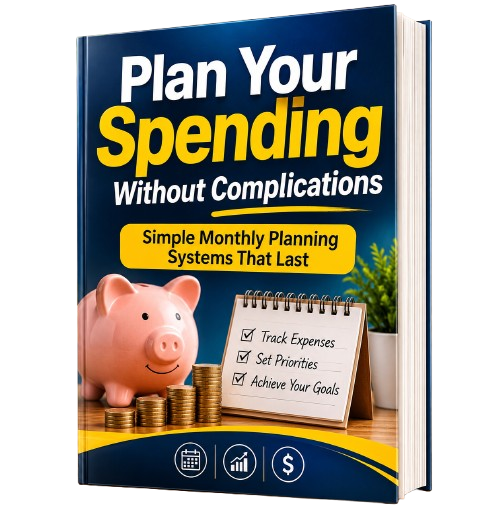
Plan Your Spending Without Complications is a practical personal finance ebook that explains how to create, organize, and maintain a manageable monthly spending plan.
Instead of demanding perfect numbers or complicated financial systems, the book focuses on simple routines, realistic estimates, and regular adjustments.
The central idea is straightforward: your financial plan should help you make decisions, not become another source of pressure.
EXPLORE THE GUIDE →Build a System You Can Actually Keep Using.
Explore a structured approach to understanding your spending and organizing your monthly finances.
- ✓ Start with a realistic picture of your income and expenses.
- ✓ Organize spending into three practical categories.
- ✓ Create a simple spreadsheet or tracking system.
- ✓ Organize accounts, paydays, and payment dates.
- ✓ Review your spending with short weekly check-ins.
- ✓ Adjust your plan when your circumstances change.
- ✓ Follow a structured 30, 60, and 90-day planning path.
Understand Your Spending With Just Three Categories.
One of the central ideas in the book is organizing monthly spending into three clear groups. This structure helps you see where your money goes without drowning in unnecessary detail.
Commitments
Payments that are scheduled and generally predictable, such as housing, insurance, loans, utilities, and agreed transfers.
Necessities
Variable everyday expenses you need, including groceries, transportation, basic clothing, and household supplies.
Choices
Flexible spending that adds enjoyment or convenience, such as dining out, hobbies, gifts, and optional subscriptions.
The book explains how to organize these categories around your own circumstances rather than imposing universal spending percentages.
A Complete Guide to Building and Maintaining Your Monthly Plan.
Explore the actual chapter structure and topics covered throughout the book.
More Than Financial Concepts. Practical Ways to Organize Your Month.
The ebook includes examples, tables, checklists, and practical planning routines that help connect the ideas to everyday financial decisions.
Minimal Spreadsheet
Explore a simple tracking sheet for organizing your monthly income, commitments, necessities, and flexible spending.
Monthly Planning Map
Learn how to bring your expected income, scheduled payments, and spending priorities together in one monthly overview.
Weekly Check-In
Explore a fifteen-minute routine to review your progress, update your figures, look ahead, and choose one next action.
Practical Checklists
Use the checklists included throughout the book to organize the first planning session, review recurring costs, and assess your routine.
Payment Calendar
Learn to organize paydays, bill dates, recurring payments, and payment buffers to better understand your monthly money flow.
30, 60 and 90-Day Plan
Follow the book's three-stage structure for setting up, refining, and consolidating your monthly planning routine.
Build a Clearer Understanding of Your Financial Routine.
The book focuses on practical knowledge and habits that can help you make more informed decisions about your monthly spending.
Understand how to organize monthly income and expenses using a simple structure.
Recognize recurring expenses and identify costs that deserve closer attention.
Learn to distinguish fixed commitments, essential costs, and flexible spending.
Understand how payment dates and income timing affect your monthly plan.
Approach financial reviews as opportunities to learn and adjust rather than judge yourself.
Prepare for known irregular expenses instead of treating every annual cost as a surprise.
Understand how to organize shared expenses and communicate about household finances.
Develop a repeatable monthly planning routine that can be adapted as life changes.
A 30, 60 and 90-Day Framework for Building Your Routine.
One of the book's practical sections organizes the learning process into three stages, each with a different focus.
Set Up the System
Establish your financial baseline, list your commitments, create a minimal tracking sheet, build your monthly map, and begin weekly check-ins.
Refine the Routine
Review your actual spending, refine categories, build your payment calendar, examine subscriptions, and begin planning irregular costs.
Make It Durable
Maintain your weekly routine, review your account flow, simplify categories where needed, and complete a three-month review.
Is This Guide Right for You?
This book is written for people who want a monthly financial planning system that is practical, understandable, and manageable.
Practical Planning Without Unnecessary Complexity.
The book is built around a few consistent principles that run throughout its chapters.
Start With What You Have
Use existing bank statements, card records, a notebook, or a basic digital document. No special software is required.
Keep the System Manageable
Focus on a small number of useful categories and repeatable routines instead of unnecessary daily tracking.
Adapt Without Starting Over
Learn to make gradual adjustments, respond to changes, and treat your plan as a flexible forecast rather than a rigid promise.
Everything Included in One Practical Digital Guide.
Plan Your Spending Without Complications
Simple Monthly Planning Systems That Last
Make Monthly Money Planning Simpler.
Get a practical guide to understanding your spending, organizing your expenses, and creating a monthly routine you can keep using.
One-time listed offer price
Plan Your Spending Without Complications
7-Day Guarantee
Your purchase comes with a 7-Day Guarantee. You can review the applicable guarantee terms and conditions during the purchase process.
Questions About the Ebook?
Here are some important details to help you understand what this guide offers.
Your Financial Plan Should Fit Your Life. Not the Other Way Around.
Stop making monthly planning more complicated than it needs to be. Explore a practical approach to organizing your spending, understanding your commitments, and creating routines that are easier to maintain.
Plan Your Spending Without Complications · 7-Day Guarantee
GET YOUR EBOOK NOW →