Organize Your Business Before You Grow
Build a clearer picture of your business with practical guidance on processes, financial records, daily operations and priorities. Learn how to create a more organized foundation before taking on the demands of growth.
Is Your Business Growing Faster Than Your Systems Can Handle?
Running a small business often means managing customers, payments, paperwork and daily tasks at the same time. Without clear routines, important details can become difficult to track.
Invoices, receipts and important business documents are scattered across different places.
You know money is coming in and going out, but your cash position is not always clear.
Too many decisions and routine tasks depend on you, making it difficult to share responsibility.
Schedules, customer messages and deadlines compete for your attention throughout the day.
Repeated tasks are handled from memory, so work can vary depending on who is doing it.
You are considering growth but need a better understanding of costs, capacity and operational readiness.
A Clearer Way to Understand and Organize Your Business
How to Organize Your Business Before Trying to Grow is a practical guide to the records, routines and priorities that help make a small business easier to manage and understand.
Organize first. Then make informed decisions.
Instead of focusing on expansion alone, the book walks through the foundations behind everyday business management: financial organization, operational processes, responsibilities, customer information and performance reviews.
- Take stock of your current business situation and identify priorities.
- Understand financial records, cash flow, margins and break-even basics.
- Document recurring work and clarify roles and responsibilities.
- Bring more structure to inventory, scheduling and customer records.
- Use indicators and review routines to assess your business over time.
24 Chapters Covering the Foundations of Small Business Organization
The book follows a practical sequence, moving from understanding your current situation to organizing money, operations and business priorities.
Understand Your Starting Point
Why organization comes before growth, how to assess your current business and what to consider when choosing a business structure and handling registration basics.
Organize Your Business Finances
Separating business and personal money, building financial records, tracking invoices and payments, managing expenses and keeping tax-related documents.
Understand Your Cash Position
Cash flow, simple cash flow forecasting, margin calculations and break-even basics to help you examine the financial side of business decisions.
Build Clearer Work Processes
Writing down how work gets done, creating checklists and standard procedures, defining team responsibilities, delegation and decision rights.
Manage Inventory and Time
Inventory control for physical products, along with scheduling, calendars and capacity planning for everyday business activity.
Measure, Review and Assess Readiness
Customer records and communication, simple goals, key indicators, review routines, dashboards, debt warning signs and a 90-day plan.
References and Further Reading
A final chapter listing the sources used and further reading related to the topics covered in the guide.
Ideas You Can Adapt to Your Own Business
The ebook includes practical templates, checklists, examples and working documents designed to help you put the concepts into practice.
Business Snapshot
A structured way to record your current position across money, customers, operations, people and time.
Checklists and Procedures
Examples of checklists and written steps for recurring tasks and everyday business routines.
Financial Records and Forecasts
Practical examples related to recording transactions, understanding cash flow and preparing forecasts.
Roles and Responsibilities
Examples for defining ownership of tasks, decision authority and delegation between people.
Review Routines
Guidance for regular reviews of cash, customer activity, schedules, performance and business priorities.
Working Templates
Templates and checklists that readers can copy, adapt and use as working documents alongside the book.
A 90-Day Plan to Help Put Your Priorities Into Practice
The book's final section brings together a practical sequence for organizing records, documenting processes and reviewing business decisions.
Stabilize Records and Cash
Update your business snapshot, start invoice and expense logs, and build a cash flow forecast to develop a clearer financial picture.
Document and Delegate
Document recurring processes, create checklists, map responsibilities and begin regular weekly reviews.
Measure and Decide
Review margins, indicators and cash, then make a written decision about growth or further improvement based on your business situation.
This plan is a framework presented in the ebook. Your priorities and pace will depend on your business and circumstances.
Build More Clarity Into the Way You Run Your Business
By applying the ideas in the guide, you can work toward more consistent routines and better-informed decisions in important areas of your business.
What You Get
A focused digital guide covering the practical foundations of organizing a small business.
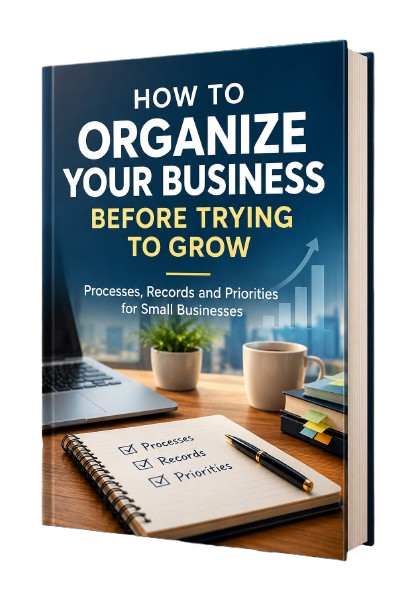
How to Organize Your Business Before Trying to Grow
One digital ebook with 233 pages and 24 chapters covering business foundations, financial records, cash flow, operational processes, team responsibilities, customer information and growth readiness.
- 233-page digital edition
- 24 chapters of practical business guidance
- Templates, examples and checklists included in the ebook
- A structured 90-day plan
The purchase is for the digital ebook. No additional products or bonuses are included in this offer.
GET ACCESS TO THE EBOOKIs This Ebook Right for You?
The guide is written for people who run or plan to run a small business and want to bring more structure to the way it operates.
Solo Business Owners
People managing a business on their own who want clearer records, routines and priorities.
Small Teams
Owners of micro-businesses with a few employees who need clearer roles and responsibilities.
Family Businesses
Families sharing business tasks who want to make responsibilities and processes easier to understand.
Freelancers
Independent professionals who have started taking on help or managing more work.
Shop and Online Sellers
People managing products, customer orders, inventory, payments and daily operations.
Service Businesses
Owners who want to document recurring tasks, manage schedules and organize customer information.
The book is designed for small businesses. Very large companies with specialized management needs may require different systems.
A Practical Approach to Organization Before Expansion
The guide focuses on useful foundations rather than suggesting that every small business needs complex management systems.
Organized in a practical sequence.
Topics move from business assessment to money, operations and direction.
Designed around small businesses.
The ideas can be adapted to the size and needs of different small operations.
Practical working resources.
Templates and checklists are presented as documents readers can adapt and use.
Focused on informed decisions.
The goal is to make business information clearer, not to promise a particular financial outcome.
Give Your Business a More Organized Foundation
Explore practical ways to organize your records, understand your finances, document everyday work and assess your priorities before trying to grow.
How to Organize Your Business Before Trying to Grow
Processes, Records and Priorities for Small Businesses
7-Day Guarantee
Your purchase comes with a 7-Day Guarantee. The guarantee period is presented as part of this offer. Please review the applicable terms during checkout.
Questions About the Ebook
A few helpful details before you make your purchase.
What is this ebook about?
It is a practical guide to organizing a small business before trying to grow. It covers business assessment, financial records, cash flow, processes, responsibilities, inventory, scheduling, customers, performance reviews and growth readiness.
How long is the ebook?
The digital edition contains 233 pages and is organized into 24 chapters.
Does the ebook include practical resources?
Yes. The book includes examples, templates and checklists that readers can copy, adapt and use as working documents.
Does it include a plan for putting the ideas into practice?
Yes. Chapter 23 presents a 90-day plan organized around stabilizing records and cash, documenting and delegating, then measuring and making decisions.
Who can benefit from reading it?
It is written for people who run or plan to run a small business, including sole owners, micro-businesses, family businesses, freelancers, shops, online sellers and service businesses.
Does the ebook provide legal, tax or accounting advice?
No. The book is general educational material, not individual consulting, legal advice, tax advice, accounting services or financial advice. Rules vary by location, and the book recommends consulting a qualified professional for decisions that depend on local requirements.
Will following the guide guarantee business growth or profit?
No. The ebook does not promise profits, business survival or guaranteed growth. Its purpose is to help readers organize information, reduce avoidable surprises and make decisions with greater clarity.
What is the price and guarantee?
The ebook is offered for $9.90 and includes a 7-Day Guarantee.
Before You Take the Next Step, Make Sure Your Business Has a Foundation to Build On.
Get How to Organize Your Business Before Trying to Grow and explore practical guidance for organizing your finances, documenting your processes, clarifying responsibilities and reviewing your business priorities.