From Text to Image: Understanding Ethics, Copyright and Commercial Use
AI-generated images raise important questions about ownership, creative rights, consent and commercial use. Discover the legal concepts, ethical considerations and practical approaches that help creators and businesses make more informed decisions.
Creating an Image Is Easy. Understanding Its Rights Is Another Story.
AI image generation has opened new creative possibilities. But when an image is published, shared or used commercially, important questions can arise.
Who owns an AI-generated image, and can the person who prompted it claim copyright protection?
Can an image generated with AI be used in advertising, products, publications or other commercial projects?
What happens when an image resembles an existing artist's work, trademark, logo or recognizable brand?
When is permission necessary to depict a real person, use their likeness or create a realistic digital representation?
How should businesses handle deepfakes, sensitive content, transparency and the disclosure of AI-generated images?
How can a creative team establish consistent rules, maintain records and respond when an image-use complaint arises?
A More Informed Approach to AI-Generated Images
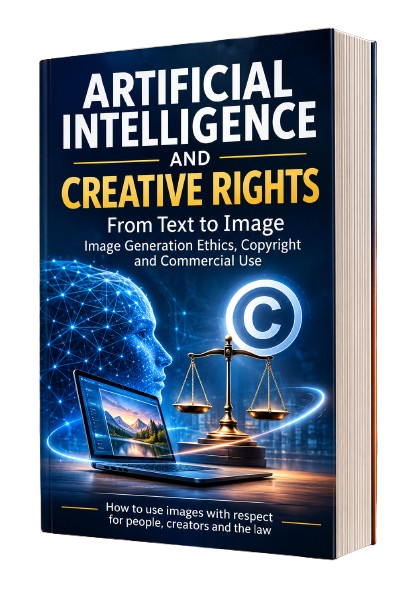
From Text to Image is an educational guide that explores the relationship between artificial intelligence, copyright, ethics and responsible image use.
Rather than focusing on how to operate a particular image-generation tool, the book examines the decisions that matter across different platforms and creative workflows.
It brings together legal concepts, country-specific comparisons and practical considerations for people who create, purchase, edit, publish or manage images.
EXPLORE THE EBOOK →Three Essential Questions
Throughout the book, three recurring questions provide a framework for evaluating image use.
- ✓ Is it allowed?
Understand the applicable legal rules, the country involved and the circumstances of use. - ✓ Is it fair?
Consider the creators, individuals and communities affected by an image. - ✓ Is it honest?
Consider whether viewers understand how an image was created and what it represents.
Explore the Four Main Parts
The book progresses from foundational concepts to international copyright comparisons, commercial considerations and practical organizational guidance.
Understanding AI Images and Creative Rights
Build a foundation in image generation, authorship, originality and the ethical considerations behind responsible use.
- 01. Introduction: Images, Machines and Rights
- 02. How Image Generation Works, Briefly
- 03. Core Concepts: Authorship, Originality and Use
- 04. Why Ethics Comes Before Copyright
- 05. Why the Rules Differ From Country to Country
Comparing International Copyright Rules
Examine how different jurisdictions approach authorship, originality, human contribution and the rights associated with generated images.
- 06. Authorship in the United States
- 07. Authorship and Originality in Canada
- 08. England and Wales: Computer-Generated Works
- 09. Australia: Unsettled and Under Review
- 10. Comparing the Four Countries Side by Side
- 11. Training Data and the Rights of Creators
- 12. Licenses, Contracts and Platform Terms
Using Generated Images Responsibly
Explore the considerations surrounding business use, trademarks, identifiable individuals, deepfakes and transparency.
- 13. Commercial Use: What to Check First
- 14. Trademarks, Logos and Brand Confusion
- 15. Real People, Likeness and Publicity Rights
- 16. Deepfakes, Consent and Harm
- 17. Sensitive Content and Protecting Minors
- 18. Disclosure, Labels and Provenance
Putting Responsible Image Practices Into Practice
Move from understanding the issues to developing internal procedures, documentation, complaint handling and team practices.
- 19. Respecting Artists and Creative Communities
- 20. Building an Internal Image Use Policy
- 21. Records, Review and Documentation
- 22. When Something Goes Wrong
- 23. Teams, Clients and a 90-Day Plan
- 24. References and Further Reading
Go Beyond Understanding the Concepts
The later chapters connect the book's concepts to practical decisions, organizational procedures and everyday creative workflows.
Commercial Image Checks
Explore considerations such as image purpose, recognizable people, brands, licensing, disclosure and review before publication.
Rights and Permissions
Understand the differences between copyright, trademarks, publicity rights, privacy, licenses and personal permission.
Internal Image Policies
Explore the sections of a written policy, including responsibilities, approved uses, prohibited uses, disclosure and review.
Records and Documentation
Understand how project records, approvals, licenses, consent documentation and image histories support responsible workflows.
Complaint Handling
Explore approaches to receiving complaints, preserving evidence, reviewing concerns, correcting problems and communicating responses.
Team and Client Practices
Understand role-based training, client communication, internal responsibilities and ongoing policy improvement.
Understand the Book's 90-Day Implementation Plan
Chapter 23 presents a phased approach for organizations that want to put responsible image-use practices into their daily operations.
Basic Protection
Focus on visibility, responsibilities and initial safeguards.
- Write a one-page policy.
- Name the commercial image approver.
- Set up a project template.
- Collect existing consent forms.
- Introduce the policy to the team.
Routines and Training
Develop consistent practices and role-based awareness.
- Run role-based training sessions.
- Introduce disclosure wording.
- Review projects for compliance.
- Prepare a service register.
- Review client and freelancer contracts.
Lasting Practice
Evaluate the process and establish ongoing reviews.
- Conduct a records audit.
- Test the complaint process.
- Update the country comparison.
- Review team training materials.
- Schedule future policy reviews.
Develop a Clearer Understanding of AI Image Rights
The book is designed to help readers understand important issues and apply its concepts to their own creative or business activities.
Explain the main authorship positions discussed in the United States, Canada, England and Wales, and Australia.
Distinguish copyright, trademark, publicity and privacy considerations.
Recognize situations where consent, licensing or disclosure may be necessary.
Understand how human creative contribution can affect authorship and copyright questions.
Identify relevant considerations before publishing AI-generated images commercially.
Understand how to develop an internal image-use policy and a basic record-keeping method.
Recognize how organizations can assign responsibilities and respond to complaints.
Use a 30-, 60- and 90-day framework to organize responsible image-use practices.
Created for People Who Work With Images
No technical background is required. The book explains technical and legal concepts in accessible language, with examples relevant to different professional roles.
Why This Guide Takes a Broader Perspective
Instead of concentrating on a specific image-generation platform, the ebook focuses on principles and decisions that remain relevant across different creative workflows.
International Perspective
Compares legal approaches across four jurisdictions, highlighting important differences rather than treating copyright rules as universal.
Ethics Alongside the Law
Examines why legal permission and ethical acceptability are not always the same thing.
Commercial Considerations
Addresses practical issues involving licenses, contracts, trademarks, identifiable people, deepfakes and disclosure.
Organizational Application
Connects the subject to internal policies, documentation, responsibilities, complaint procedures and team training.
What You Get
Everything included in this offer is clearly identified.
From Text to Image
Image Generation Ethics, Copyright and Commercial Use
One digital ebook covering the 24 chapters of the book, from the foundations of AI image generation to international copyright comparisons, commercial use and practical organizational guidance.
Make More Informed Decisions About AI-Generated Images
Explore the legal, ethical and practical questions behind modern image generation with a guide that connects international perspectives to real creative and business decisions.
From Text to Image · Digital Edition
7-Day Guarantee
Your purchase comes with a 7-Day Guarantee. You can explore the purchase offer with this guarantee included.
Questions Before You Get Started?
Here are some important details about the ebook and its content.
What is From Text to Image about?
It is an educational ebook about AI-generated images, ethics, copyright, authorship, commercial use and responsible creative practices.
Which countries are covered?
The book focuses on the United States, Canada, England and Wales, and Australia. It also refers to certain European Union developments where relevant, without providing an in-depth analysis of European copyright law.
Do I need technical or legal experience?
No. The book is written for a general professional audience. Technical and legal concepts are explained in accessible language, and no technical background is required.
Does the ebook teach me how to operate image-generation software?
No. It does not rank image-generation products or recommend specific tools. Its focus is on the legal, ethical and practical decisions involved in using generated images.
Does it cover commercial use of AI-generated images?
Yes. It discusses licensing, contracts, commercial considerations, trademarks, recognizable people, publicity rights, disclosure and other issues related to business use.
Does the book include practical guidance?
Yes. Its later chapters discuss internal image-use policies, records and documentation, complaint handling, team training, client communication and a 30-, 60- and 90-day implementation plan.
Is this ebook a substitute for legal advice?
No. The book is intended for general education and is not legal advice. Copyright, trademark, privacy and publicity laws vary by jurisdiction and may change. Specific or high-risk situations should be discussed with a qualified lawyer in the relevant country.
What exactly do I receive?
The offer includes one digital ebook: From Text to Image – Image Generation Ethics, Copyright and Commercial Use.
What is the price?
The listed purchase price is $9.90, with a 7-Day Guarantee.
Understand the Responsibilities Behind Every Generated Image.
Whether you create images, manage creative projects, publish content or use AI-generated visuals in business, understanding copyright, ethics and responsible image use matters.
Explore the legal comparisons, practical considerations and organizational approaches presented in From Text to Image.
$9.90