Take Control of Your Debt. Know Where to Start.
Understand what you owe, identify which debts need attention first, and build a realistic repayment plan that respects your income, your budget, and your everyday life.
When Debt Feels Like Too Much to Handle
Managing several balances, payment dates, interest charges, and unexpected expenses can make it difficult to know what deserves your attention first.
Balances Keep Growing
Interest and additional fees can make outstanding balances harder to reduce, especially when you only make minimum payments.
Too Many Payment Dates
Different creditors, due dates, minimum payments, and account conditions can make it difficult to keep everything organized.
Uncertainty About What Comes First
Should you focus on the smallest balance, the highest interest rate, or a debt that carries a greater risk if payments are missed?
Unexpected Expenses
A car repair, medical expense, or interruption in income can disrupt a repayment plan when there is no financial cushion.
Confusing Financial Documents
Interest rates, loan terms, fees, and creditor notices can be difficult to understand without knowing which details matter.
Financial Stress and Avoidance
Worry and shame can make it harder to open statements, contact creditors, and have honest conversations about money.
The first step is not having every answer. It is getting a clearer picture of your financial situation.
START WITH A CLEARER PLAN →A Structured Approach to Understanding and Managing Debt
This guide brings together five central parts of a debt exit plan: mapping your debts, understanding their costs, choosing a repayment order, exploring ways to address what you owe, and protecting yourself from future financial setbacks.
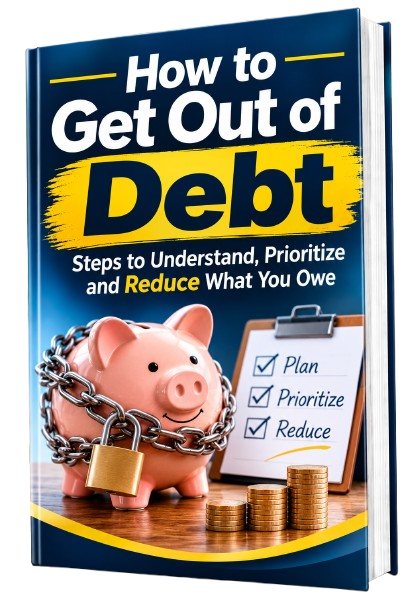
Introducing How to Get Out of Debt
Steps to Understand, Prioritize and Reduce What You Owe.
Rather than approaching every bill as a separate emergency, this guide helps you see how your debts fit together and how to make decisions based on actual numbers.
Map Your Financial Situation Understand your balances, interest rates, minimum payments, due dates, and account status.
Understand the Cost of Debt Learn how interest, fees, and loan terms affect the amount you owe.
Compare Repayment Strategies Explore the debt snowball and debt avalanche approaches.
Build a Sustainable Routine Connect your budget, repayment priorities, and financial cushion.
Explore the Complete Content
The guide follows a structured progression, from understanding your current debts to building a repayment routine and knowing when to seek additional help.
Understand Two Important Ways to Prioritize Debt
The guide explains two established repayment approaches and discusses how to compare them according to your balances, interest rates, and personal circumstances.
Debt Snowball
Focus extra payments on the smallest outstanding balance while continuing to make the minimum payments on your other debts.
- Prioritize the smallest balance.
- Work toward clearing individual accounts.
- Use smaller milestones to build momentum.
Debt Avalanche
Focus extra payments on the debt with the highest annual interest rate while continuing to make minimum payments on the others.
- Prioritize the highest interest rate.
- Consider the cost of carrying each balance.
- Compare the potential interest implications.
The guide also compares both methods and discusses a combination of approaches. The most appropriate choice depends on the details of your situation.
Go Beyond Understanding the Problem
The ebook includes practical procedures, examples, checklists, and planning exercises that help connect financial concepts with everyday decisions.
Debt Inventory
Learn what information to record for each debt, including creditor, balance, annual rate, minimum payment, due date, and account status.
Monthly Budget
Organize income, essential expenses, minimum payments, flexible spending, and irregular costs into a clearer monthly picture.
Safety Cushion
Explore how to choose a starting savings target, make contributions, and rebuild the cushion after an unexpected expense.
Interest Comparisons
Understand how interest affects outstanding balances and how to compare the costs of different debts.
Creditor Conversations
Learn how to prepare for discussions with creditors, ask about possible arrangements, and keep written records.
Practical Checklists
Use the guide's checklists and review procedures to organize your documents, monitor important dates, and assess your progress.
A Practical Framework for Your First Three Months
The guide brings its earlier concepts together in a structured calendar, with tasks and checkpoints for each phase.
Build Your Foundation
Focus on clarity, organization, and protecting essential payments.
- Collect statements and list debts.
- Build a monthly budget.
- Identify payments at risk.
- Review recurring expenses.
- Start your safety cushion.
Build Momentum
Choose a repayment approach and begin directing extra payments.
- Choose snowball, avalanche, or a hybrid.
- Write your repayment order.
- Begin extra payments.
- Address collection and negotiation issues.
- Review your credit report.
Strengthen Your Routine
Review your progress and adjust your plan to changing circumstances.
- Maintain your payment routine.
- Review interest rates.
- Evaluate income and cost changes.
- Compare your financial starting point.
- Plan your next quarterly review.
Build a Better Understanding of Your Financial Situation
With the concepts and practical guidance presented throughout the ebook, you can develop a more organized approach to managing what you owe.
See the Complete Picture
Understand how to organize your debts into a more accurate and useful financial inventory.
Understand Borrowing Costs
Recognize the role of interest rates, fees, minimum payments, and repayment terms.
Compare Your Options
Understand the differences between repayment methods and alternative debt arrangements.
Plan Around Real Income
Consider your essential expenses and available money before deciding how much to put toward debt.
Prepare for Unexpected Costs
Understand how a financial cushion and sinking funds can help protect your repayment routine.
Make More Informed Decisions
Learn when creditor discussions, nonprofit counseling, or professional advice may be worth considering.
How to Get Out of Debt
Steps to Understand, Prioritize and Reduce What You Owe
Everything You Need to Start Understanding Your Debt
Your purchase is for the digital edition of the ebook:
One Complete Digital Ebook The guide covering debt organization, repayment approaches, creditor communication, financial protection, and planning.
Practical Examples and Guidance Explanations, hypothetical examples, exercises, checklists, and planning procedures included in the guide.
30, 60 and 90-Day Planning Framework The practical calendar presented in the ebook's final action-planning chapter.
The product described here is the ebook itself. No separate bonus products or additional services are included in this offer.
Is This Guide Right for You?
Written for adults who owe money and want a structured way to understand their obligations and respond.
People managing credit card balances and personal loans.
People dealing with several accounts, payment dates, or different types of debt.
People who want to understand interest, loan terms, fees, and minimum payments.
People who need a more realistic way to organize their monthly cash flow.
Partners or family members who want to support someone dealing with debt.
Readers looking for accessible financial education without assuming previous formal finance knowledge.
This guide is less suited to situations requiring immediate legal representation or decisions involving business debt. Those circumstances may require qualified professional assistance.
A Guide Built Around Real Financial Decisions
The ebook brings several connected parts of personal debt management together in one structured educational resource.
Numbers Before Guesswork
Emphasizes accurate balances, rates, payment dates, and actual monthly cash flow.
Cost and Risk Together
Discusses why repayment decisions should consider more than balance size alone.
Sustainable Financial Planning
Addresses safety cushions, realistic budgets, and unexpected expenses.
Practical Consumer Awareness
Covers debt collectors, creditor negotiations, credit records, and debt relief scams.
Attention to Emotional Wellbeing
Recognizes the role of shame, stress, communication, and family conversations.
A Structured Three-Month Framework
Connects the earlier guidance with the 30, 60 and 90-day action calendar.
Start Building a Clearer Approach to Your Debt
Get the practical educational guide that brings together debt organization, repayment strategies, financial planning, and informed decision-making.
7-Day Guarantee
Your purchase comes with a 7-Day Guarantee. This gives you a seven-day guarantee period associated with the offer. For applicable terms and refund procedures, refer to the purchase platform's official policy.
Questions Before You Get Started?
Here are answers to common questions about the ebook and its contents.
What is How to Get Out of Debt about?
It is an educational guide about understanding, organizing, prioritizing, and reducing personal debt. It covers interest, repayment methods, monthly cash flow, creditor communication, financial protection, and a 30, 60 and 90-day planning framework.
Does the guide explain the debt snowball and avalanche methods?
Yes. It has dedicated chapters explaining both methods and another chapter comparing their differences, including the possibility of combining approaches.
Does it include practical exercises and examples?
Yes. The ebook includes practical exercises, checklists, hypothetical examples, debt-list guidance, budgeting procedures, emergency planning, and repayment review steps.
Does it include a 30, 60 and 90-day plan?
Yes. Chapter 23 presents a three-month action calendar divided into foundation, momentum, and routine-building phases, with tasks and checkpoints.
Is this guide suitable for beginners?
The guide is written for adults who want a structured way to respond to debt. It does not assume formal financial education and aims to explain financial concepts without unnecessary technical jargon.
Does the ebook provide personalized financial advice?
No. It provides general educational information. It does not take into account your individual income, family circumstances, assets, obligations, or specific contracts. Significant financial, legal, and tax decisions may require qualified independent advice.
Does the guide cover debt collection and creditor negotiations?
Yes. It includes chapters on negotiating with creditors, hardship programs, payment plans, debt collectors, and consumer rights. Rules differ by country and region.
Does it explain how to protect my credit record?
Yes. Chapter 18 addresses protecting your credit record, checking credit reports, and dealing with possible errors.
What exactly do I receive?
The offer is for the digital edition of How to Get Out of Debt: Steps to Understand, Prioritize and Reduce What You Owe.
How much does the ebook cost?
The listed purchase price is $9.90.
Does the purchase include a guarantee?
Yes. The offer includes a 7-Day Guarantee. Refer to the purchase platform for the applicable terms and refund procedures.
You Don't Need a Perfect Plan. You Need a Clear Starting Point.
Understand what you owe. Learn how interest and repayment priorities work. Explore practical ways to organize your finances and build a plan that respects your real-life budget.